Saturday, 30 June 2018

Week 30 - Activity 6 Applied Practice

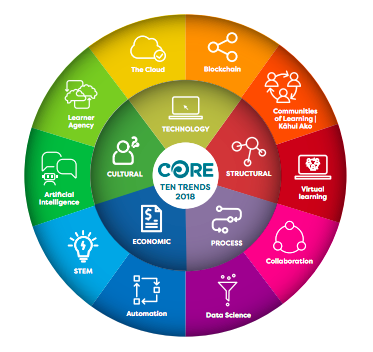
Using Rolfe, Freshwater, and Jasper’s (2001) reflective model this weeks blog will discuss a global trend. With many trends to choose from I have decided to reflect on digital learning and technology in education. 

What

The trend of digital learning captivated my attention as I feel I use a lot of digital tools and devices in my teaching but often wonder what impact it has on students learning and how I could better utilise a balance of digital tools and my own teaching to enhance students learning, to better prepare them for the future (academically and digitally). The digital leader at my school has developed a digital fluencies rubric to support teaching and learning (aligning with the new curriculum). Through using this rubric I have moved beyond relying on apps such as mathletics and sunshine online/classics. These apps allow the students to learn through playing games and earning points as they focus on practice and consolidation. I have found that to prepare junior students for digital learning they need to have relevant learning experiences that enhance their learning whilst being engaging and teaching them the digital skills that they will need for future learning. My recent literature review indicated that professional development is a key factor in addressing this trend. Teachers need to be up skilled to best prepare students for developing technologies in an ever changing world, which is what I am currently trying to achieve with up-skilling myself as well as sharing my expertise with other staff.

So what

Daggett (2014) highlights the importance of schools needing to keep up with advances in technology. Furthermore Daggett discusses how much technology we use and rely on in the modern world, “Using technology thoughtfully for instructional purposes will allow us to stretch learners’ thinking in ways that will lead to success in today’s increasingly global economy and rapidly evolving digital environment” (Daggett, 2014, p.4). Digital learning is a global trend as “education has a role to play in providing the skills and competencies needed to operate in this new world” (OECD., 2016, p18). Thus presenting further problems for schools of how much time, professional development and resources (money) should be put into digital learning whilst also engaging learners, and keeping systems and technologies current (CORE education, n.d.). This impacts on mine and others teaching of preparing students to be lifelong learners so they are able to adapt as the world and technologies change.
Now what 

Mastering the balance of the use of digital tools for learning and the personal learning relationships of myself with my students is a task I am still perfecting. I have many students who lack focus when working with me and want to rush through their work to get to a digital task but then are not gaining the instruction and learning that they need to progress from the digital task and often stray from the assigned task. Therefore I need to develop learning tasks and teaching that can enhance learning and reflect my students learning styles. I also need to use my technology expertise and leadership role to lead by example as well as support other staff in up-skilling. As we are time poor I plan on using my growing confidence in sharing online to use our school Google+ account for sharing lessons, research and ideas with staff. My school is already working with the new digital technology curriculum, however from discussions with other schools in our Kahui ako this is not the case across our community of schools which raises the issue of equal opportunities across schools and within schools.


References

CORE Education 2018 Ten Trends document. (n.d.). Retrieved from https://core-ed.org/core-education-2017-ten-trends-document/finished#uff

Daggett, B. (2014). Addressing Current and Future Challenges in Education. Retrieved
from http://www.leadered.com/pdf/2014MSC_AddressingCurrentandFutureChallenges.pdf

OECD. (2016) Trends Shaping Education 2016, OECD Publishing, Paris. DOI: http://dx.doi.org/10.1787/trends_ edu-2016-en Daggett, B. (2014). Addressing Current and Future Challenges in Education. Retrieved from http://www.leadered.com/pdf/2014MSC_AddressingCurrentandFutu reChallenges.pdf

Rolfe, G., Freshwater, D., Jasper, M. (2001) Critical reflection in nursing and the helping professions: a user’s guide. Basingstoke: Palgrave Macmillan.

Whittaker, L (2018). Digital technology overview; MBS Digital Fluencies 2018. Retrieved from http://www.maraetaibeach.school.nz/files/Copy-of-Digital-Fluencies-updated-Feb-18.pdf

Tuesday, 19 June 2018

Week 29 - Activity 5 Applied Practice

For this blog I will reflect on my use of social online networks and Professional Learning Networks (PLNs) in my professional development, using Jay and Johnson’s (2002) reflective model.
Step 1
I use a range of social online network tools, however, I prodeminently use Facebook and Google+ as social networks and forums for professional development. I engage in professional discussions, teaching ideas and learning conversations. I find this is a great way to gain ideas and expand the teaching community that I engage with. I feel that I am good at gaining professional development from these tools but am only just beginning to share my own ideas and knowledge. I am a passive user of various Facebook groups (NZ teachers (primary) Facebook group , Seesaw Teachers and Arty Farty Teachers). However within our school teachers Google+ group I am a more active participant as I share readings, youtube videos, ideas and professional development links with the group. I feel that that the School Google+ is not working as effectively as it could. This could be due to the small amount of teachers that we have so the expertise bank is not as broad. The conversations that I find valuable on other networking sites are the ones that our staff have around the school, as we have a very face to face culture.

Step 2
Through discussions with colleagues and from the MindLab Social Media Tool survey I found teachers prefer to use; social personal networks (Facebook, Google+) and Social forums (Facebook groups, Google+ communities) and Social Streams (Twitter) for their own professional development. A few of my colleagues rave about the use of twitter. Whitaker, Zoul and Casas (2015) discusses the value of growing a P2LN through Twitter. Rehm and Notten (2016) also suggest “Twitter can contribute to the continuous professional development of teachers by initiating and fostering informal learning” (p.215). Through these discussions, research and my reflection on PLNs I have reactivated my Twitter account that I created in week 7 of the MindLab course. I would like to improve how I use social personal networks, social forums and social streams for my own and others professional development. I can improve what is not working by using these tools more regularly and actively contributing to build and invest in PLN networks. This will not only require me to make time to regularly use these tools but also to contribute. Rehm and Notten (2016) state “we must find the time to consistently “take that one minute” to invest in other people as well as ourselves” (p.13). An alternative perspective from my colleagues is spending too much time in our busy lives to achieve this.

Step 3
The implication of using social online networks for professional development is finding the time for effective engagement whilst also being conscious that I do not get stuck with online trawling. This reflective process has highlighted the importance of engaging in social media tools, not only for my own professional development but also the impact my engagement has for other professionals. This will require me to be brave and to put myself out there. Whitaker et al. (2015) suggests a Folllow 5, find 5, take 5 approach to establishing P2LNusing Twitter. To ensure I don’t get trapped in the online world I will use Whitaker et al. (2015) steps to become an active participant in Twitter, whilst managing my time and contributions; “ask a question, share a resource, respond to a comment tweeted out by someone else, and, lastly, tweet out something personal” (p.6).

References

Jay, J.K. and Johnson, K.L. (2002). Capturing complexity: a typology of reflective practice for teacher
education. Teaching and Teacher Education, 18, 73-85.
Rehm, M., & Notten, A. (2016). Twitter as an informal learning space for teachers!? The role of social
capital in Twitter conversations among teachers. Teaching And Teacher Education, 60,
215-223. doi: 10.1016/j.tate.2016.08.015
Solis, B. (2018). The Conversation Prism. Retrieved from: https://conversationprism.com/
Whitaker, T., Zoul, J., & Casas, J. (2015). What connected educators do differently. New York, NY:
Routledge.


Friday, 15 June 2018

Week 28 - Activity 4 Applied Practice

Using Rolfe, Freshwater, and Jasper’s (2001) reflective model this weeks blog will ‘Critique and address issues of law, regulations and policy in practice using a reflective model’ using school policy documents as well as teaching codes and standards.

What?
My ethical situation occurred last year when a student found inappropriate images, while using pic kids. The student then proceeded to show the images to other students. Due to the app they were using and that they used voice search instead of typing meant that we were unable to find the search history to see what words had been searched. The dilemma was what I did in reaction to the situation - either do nothing or act on the situation. I referred to the school digital policy and involved the digital team leader in the situation. We consulted the school cyber safety agreement that states that students may lose access to the ICT services and devices. As a result the students parents were informed and the student lost access to all devices for a week. I also had conversations with the other students and their parents who had seen the inappropriate images. The digital leader contacted our provider to ensure the filters would not let such images through again. I also taught additional cyber safety lessons.

So what?
I recognised that other children had seen the images and that it was possible for it to occur again and processes needed to be put into place to stop it from happening again. This also implied that they did not understand inappropriate screen images and what to do if one appeared. The time between cyber safety lessons was too long for it to have the best impact. I knew that there were filters that stopped images from getting through but was unaware that some images could still get through, particularly through different apps. This was new learning as I  became aware that pic kids app does not have the ability to trace what students search for. The school policies on digital technology and cyber safety and the cyber safety agreement form supported the actions we decided to make. Ehrich’s (2011) decision-making model outlines critical incidents for a dilemma. The relevant ones that apply to this scenario are public interest and global context because it involved the student that searched the images, the students who viewed it and all of their parents. The regulations in Our code our standards (Education council, 2017) support this with codes around commitment to learners and commitment to family and whanau. I interpreted these regulations and school policies to support my decision making by putting the students wellbeing first as well as ensuring that I informed all the relevant people and putting suitable actions and teachings into place to try and prevent further incidents. I also ensured the consequences were suitable in regards to the requirements outlined in the school policy documents.


Now what?
To support in ensuring this does not happen again I need to ensure that students have more meaningful and purposeful activities to complete when working on the devices so they have more directed searches and outcomes. I hope that this will keep students from doing their own searches which could lead to inappropriate images.
Ensure regular cyber safety lessons are being taught to remind students of how to be safe online and what to do if they see something inappropriate.
If this situation was to continue to occur it might mean restricted use of the devices or removing the app due to not being able to monitor the searches.

References

Education Council. (2017). Our Code Our Standards. Retrieved from:

Ehrich, L. C. , Kimber M., Millwater, J. & Cranston, N. (2011). Ethical dilemmas: a model to
understand teacher practice, Teachers and Teaching: theory and practice, 17:2, 173-185,
DOI:10.1080/13540602.2011.539794

Rolfe, G., Freshwater, D., Jasper, M. (2001) Critical reflection in nursing and the helping professions:
a user’s guide. Basingstoke: Palgrave Macmillan.

Maraetai Beach School Board of Trustees, (2018). Responding to digital incidents.  School Docs
retrieved from http://maraetaibeach.schooldocs.co.nz/

Maraetai Beach School Board of Trustees, (2016). Digital Technology and Cybersafety.  School Docs
retrieved from http://maraetaibeach.schooldocs.co.nz/

Tuesday, 5 June 2018

Week 26

Inquiry question

How can shifting pedagogy through professional development support digital learning and teaching in the NZ curriculum?

I have broken down the ethics that I will need to be aware of when completing my collection methods. 


Wednesday, 23 May 2018

Week 25

I keep getting myself in a spin… I changed my literature review question so many times as I continued to read deeper into the research. I ended up with this question - What is the impact of digital learning on the New Zealand curriculum and teaching pedagogy? I wrote my literature review with a key Kaupapa Maori focus, woven into each subtheme. However for some unknown reason I deleted New Zealand from my question at the last minute and am now having serious writers regret over my final submitted question being…. What is the impact of digital learning on students learning the curriculum and teaching pedagogy?

Now that I am beginning to think about the next assignment I do not want to end up with the same feeling after submitting it so would love some help with clarity before I get too swamped down with assignment 2.
My original focus was around leading teachers to make a digital change and the research I discovered during my literature review was very focused on teachers needing professional development to teach students digital learning across the curriculum. I decided that I did not want to focus on how to lead change but on the research that I would need to support the reasons behind changing pedagogy to being more digitally focused.

After all this ramble….. I am left pondering my teacher inquiry topic/question for the next assignment. Currently I am thinking…
How can shifting pedagogy through professional development support digital learning and teaching in the New Zealand curriculum?

Monday, 21 May 2018

Week 25 - post literature review thoughts

I finally submitted my literature review! I ended up with a further revised question as a I narrowed the scope.

I feel some relief with having worked so hard on it to now have it completed however I also feel nervous with still having about 6 tabs of research articles open on my laptop that I would have loved to have used. I just did not have the word count to include them all. I will forever be left wondering if some of the articles could have been better to use than the ones that I used... wondering if some of them had better links across the sub themes of my topic.... however I needed to commit to what I had done. Maybe I can use them for further research projects.

Hopefully I can be proud of what I have achieved.

Saturday, 19 May 2018

Week 24 - Literature Review Thoughts

I have been doing lots of reading to answer the question posed in my previous blog post. Once I started reading I found that my question was almost two questions, one on leadership and one on digital learning.

Once I had reflected on that, I found that I was being pulled to the digital learning readings and delving more into that research.

I reflected on what I wanted to achieve from this inquiry... I want to support my team in introducing a new digital initiative of SeeSaw. Once I began to think about the team of teachers that I will be leading I found that the issues that may arise could be around why? Why are we starting a new digital initiative? This made me wonder if my literature review should focus on digital learning and its impact on students and teachers so I can use the research findings to support my change initiative.

Therefore my teacher inquiry is likely to still be focusing on leading change but the research of the literature review will hopefully support me in doing this through justification of the digital learning on student engagement, curriculum and pedagogy.