Wednesday, 28 March 2018

Week 17 - Applied practice


After reading Finlay (2008) and working with my MindLab study group I began to reflect more deeply on how I reflect. I constantly reflect on my practice privately and with colleagues. I am critical about my practice and willingly change my practice when and as needed. I make anecdotes to my plan, make notes in modelling books and have discussions with colleagues. For example if my students are not on task at the beginning of a writing lesson then I take into account the students' cues and reflect on why. I then may get the students to come back to the mat to either discuss the topic again or change the topic completely to gain better clarity. I make notes on my plan and in my modelling book for future reference and formative assessment. I then reflect with my colleagues as we plan together, we discuss what has gone well and how we can support our learners with our next steps. This works for myself, my students and my colleagues as we work well together to share our ideas.  
However from the research that I have done for this activity I have realised that I need to use more research and use reflective models such as Jay and Johnson’s (2002) reflective model. Continuing with the writing example I could use research about writing such as Sheena Cameron and Louise Dempsey’s The Writing Book (2013) to help support future change. This is what we endeavour to do in our school teaching inquiry, reflecting against our own hunch, beliefs and values but if I use research and wider reflection beyond self reflection I can challenge my own thinking. If I am not looking beyond my own thoughts and beliefs then I am not likely to change my perspective.
According to Finlay (2008) critical reflection is “understood as part of the process of life-long learning (p.1). Critical reflection-on-action should “review, describe, analyse and evaluate their past practice with a view on gaining insight to improve future practice” (Finlay, 2008, p.1). Within the mindlab course activities I noticed that others find frequent reflective practice easy when it is with colleagues or by themselves. Sharing reflections with the wider professional community is not something we are so good at and an area I also need to develop. Regular reflections that occur within our own heads and with colleagues have value that can be added through sharing with a larger community or professionals. I can improve this by ensuring I make time to use research to support my critical reflections and sharing these via my blog. I started this blog when I began my MindLab journey but I feel that I am only just beginning to become truly reflective of my learning journey.
Finlay (2008) has made me think about my perspective of reflecting as needing to be more than what I do currently in my teaching bubble. There is vast knowledge, expertise and experience just a click away that I could be tapping into to continue to enhance my professional development. This perspective will influence my reflective practice as I become more open with my reflections through sharing my critical reflections online and becoming a more of an active member in collaborative formats outside of my school colleagues such as blogging, being an activities participant in the New Zealand Teacher facebook group, other teaching/education groups and twitter groups. As a PLC leader in my school I will use the reflective model to improve my leadership practice and support my followers in their reflective learning journeys as we work through our collaborative teaching inquiries.

References
Cameron, S., & Dempsey, L. (2013). The writing book; A practical Guide for Teachers. Auckland, N.Z.: S. Cameron.
Finlay, L. (2009). Reflecting on reflective practice. Practice-based Professional Learning Centre, Open University. Retrieved from http://www.open.ac.uk/opencetl/sites/www.open.ac.uk.opencetl/files/files/ecms/web-content/Finlay-(2008)-Reflecting-on-reflective-practice-PBPL-paper-52.pdf
Jay, J.K. and Johnson, K.L. (2002). Capturing complexity: a typology of reflective practice for teacher education. Teaching and Teacher Education, 18, 73-85.

Wednesday, 14 March 2018

Week 14

Multi Local
Rituals - where do you shop? Where does the food come from that you eat?
Relationships - facetime or physical who do you spend your time with in a week?
Restrictions - where are you able to live? What passport do you hold?


Analogy
Considered images and their analogy of culture and how to work effectively across cultures.
We saw all 4 pictures as a set and decided it depended on perspective.
  • Big fish and little fish. Big fish appears big but if zoomed out it may not be big compared to a whale etc. Fish is not aware of the water as it knows nothing else.
  • House in the distance behind the sea. The house looks like it is on the water but there may be land between.
  • Camera lense. Can zoom in and out and focus on different things. Wide and close up lense views.
  • Iceberg. Wide iceberg at the top to narrow above the water but what is under the water.
Relating back to our students… it is our perspective on the learners and that to be culturally aware
we need to be aware of what we can’t see. Not just understanding others but understanding ourselves and our perspectives.


Curriculum Principles
A report by the ERO looked at how well the eight principles of the New Zealand Curriculum
were represented in classrooms  The eight principles studied were:
  • Coherence
  • Community engagement
  • Cultural diversity
  • Future focus
  • High expectations
  • Inclusion
  • Learning to learn
  • Treaty of Waitangi
The report found that “Cultural diversity, future focus and Treaty of Waitangi were the least well represented principles in approximately a third of classrooms. These three principles were not evident at all in about a sixth of classrooms.”(Educational Review Office, 2012).
Education Review Office. (2012). The New Zealand Curriculum Principles: Foundations for Curriculum Decision-Making. Retrieved from http://www.ero.govt.nz/publications/the-new-zealan…

Digital
Engagement and agency


Working in Google docs and measuring the engagement in comparison to writing in their writing books, their cognitive engagement was greater as they had to focus on achieving their goals.  Their behavioral engagement and the emotional engagement improved through the collaboration with their peers as they developed relationships through communication and feedback.


Working with Seesaw has brought similar results with students asking to engage with the program and extend their cognitive, emotional and behavioral competencies.


Student Agency
Martin (2004, p. 135) characterises agency as "the capability of individual human beings to make choices and act on these choices in a way that makes a difference in their lives”. However, although we might believe that the most transformative learning comes from the learner’s own agency, Lindgren and McDaniel (2012, p.346) underline that “giving students the sense that they have control and the power to affect their own learning is one of the great challenges of contemporary education”.


Lindgren, R., & McDaniel, R. (2012). Transforming Online Learning through Narrative and Student Agency. Educational Technology & Society, 15(4), 344–355.

Martin, J. (2004). Self-Regulated Learning, Social Cognitive Theory, and Agency. Educational Psychologist, 39(2), 135-145.

Week 15

In 20 years jobs that will still exist are jobs that will require emotional care / human response, designers etc,

Artificial intelligence
  • Thinking humanly
  • Thinking rationally
  • Acting rationally
  • Acting humanly

“Inquiry - the organised pursuit of curiosity.” Stenhouse, L. (1981). What counts as research? British Journal of Educational Studies, 29(2), 103-144.

Tuesday, 27 February 2018

Week 13

Digital

4 Keys to fun

  • Hard fun - challenging levels to hook you in but balanced with easier levels to keep you going. If master it and find the cheats then enjoyment can fade.
  • Easy fun - novelty
  • Serious fun - meaning
  • People fun - friendship

Games for education

According to Amory (2007), Educational computer games should:
  • Be relevant, explorative, emotive and engaging
  • Include complex challenges, puzzles or quests
  • Be gender-inclusive and non-confrontational
  • Provide appropriate role models
  • Develop democracy and social capital through dialogue
  • Support authentic learning activities
  • Support the construction of tacit knowledge

Why are we not tempted to use the design and learning of a learning quest as an assessment? If someone completed a game to a high level you would not test them to see if they knew it because the game shows what they know. Why do we then test kids on what we already know they know?

Applying the 4 keys to fun to games in the classroom - How do you use digital or non-digital games in your practice? Why?How do you apply 4 keys to fun in your practice? What is going on in the classroom that relates to these types of fun?
Thinking of Mathletics that we use regularly in the classroom and for home learning… the students seem to enjoy life mathletics, particularly when versing other children in the class. This has the people fun (social interaction), even level of easy/hard as similar levels of ability and serious fun as it is practicing their basic facts.

Leadership
Gamification and education - making learning fun.
How can we use gamification (appointment dynamic, influence and status dynamic, progression dynamic, communal discovery) to influence follower behaviour / change initiative?

Discussed how we can use gamification in the classroom to promote independence and self-regulation. In depth chat about how there is a fine line between scaffolding and using prizes etc that then take away the independence and move from intrinsic motivation to extrinsic motivation.

Tuesday, 20 February 2018

Week 12

Makerspace - learning by doing. Control over their learning. Inquiry model. Teacher as facilitator.
E.g. Using scratch to help learn about fractions of a set.
Start - what problems are you going to solve.
Think about the learners and their relationships with the communities.
Needs an authentic problem to solve.

This week we had 6 stations that we could work through. We had a really indepth discussion with the facilitator as well as played around with a makebot. It was really interesting to reflect on what we have got out of MindLab so far and how it has impacted on out teacher, our learners and ourselves as people.

Sunday, 18 February 2018

Week 11

Leadership
Entrepreneurs / enterprise
  • Risk takers
  • Understand what customers want
  • Finding and managing people
  • Accept advice and driven to push ideas
  • Resilience
  • Focus
  • Self reflection


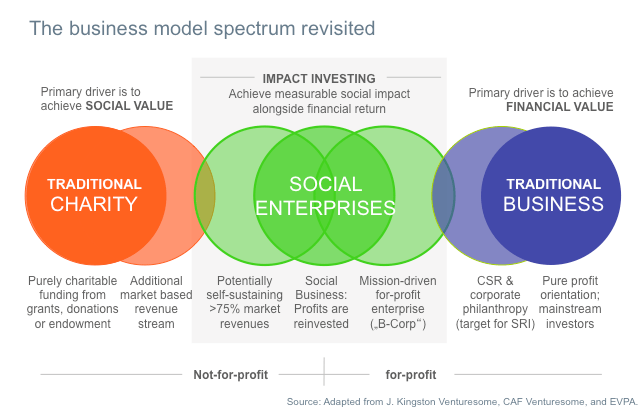
Toms shoes - social enterprises
Bikes in schools - traditional charity

Schools - traditional charity

Digital
Crowdsourcing is the practice of engaging a wider community to work towards a goal.
Real world problems
The power of crowdsourcing - the human impact and how machines may not be able to e.g. check photo content or scribing curly handwriting.
Gathering and processing data

Tuesday, 6 February 2018

Week 10

Collaboration

SCRUM agile
  • Collaborative
  • Sprints (work quickly - mini projects)
  • Continuous feedback
Without knowing where you want to end up, you take a step by step approach.

KANBAN
WIP limits
Allow you to make sure you finish work in progress before starting new ones.

E.g.
To do
Doing
Done
Put postit in here with the task written on it.


(Trello - digital version)

Could re label for juniors with
Must do - can do - could do


Reflection

Liked
Learned
Lacked
Longed for

New and better ways to improve student learning.
What can stay the same and what needs to be removed / tweaked or redesigned. These drive the agile leader.

Using all the best of the past but designing for the future, to get better all the time.