Monday, 23 April 2018

Week 21

My original inquiry question developed in previous weeks task was;

  • How can I inspire and lead teachers to implement change in their practice through the use of Seesaw? 

I had in depth discussion with my MindLab CoP group and worked through the inquiry working template below to revise my question. My question continued to develop as I did some initial research and identified that the key area that I wanted to focus on is leading change in my junior syndicate.


Inquiry question(s) working template

Turning your inquiry topic(s) into an break-down inquiry question


Turning a break-down inquiry question to an initial teacher inquiry question


Turning the initial teacher inquiry question into an initial literature review question


From working through this process, I think that the literature review question that I would like to focus on is
  • How does leading teachers in a new digital initiative affect teachers daily practice in the junior syndicate?
I would love to know what others think of this question

Sunday, 15 April 2018

Week 20

What do you immediately identify as some of the greatest areas of need for your students?
  • Behaviour 
  • Learning links and engagement between school and home - students not doing home learning, parents busy and not knowing what students are learning 
  • 21st skills to develop learning skills 
  • Using digital tools to complete tasks and learning, constantly off the set task. 
  • Roll out of Seesaw - new strategy for other teachers that I am eager to implement. 
What is one thing you can do differently in the classroom/in your practice today that could address that need?
  • Engagement through digital tools 
  • Seesaw 
  • Set technology lessons to develop skills with set criteria (could link with Seesaw using activities) 
  • Leadership for Seesaw across the junior school 

Reflective Questions for thought
  • I would like to improve collaboration with whanau? 
  • I am really curious about leading change with colleagues? 
  • I think using the devices for a set task/activity would really make a difference? 
  • I would like to change how devices are used across the junior school? 
  • What would happen to my students’ learning if I did used Seesaw more to not just share learning experiences but complete tasks? 
  • How can I implement Seesaw across the junior school? 
  • How can I improve leading other colleagues with change? 

Integrating the Principles of Kaupapa Maori Research into my Teacher Inquiry.

“Whānau - the extended family structure principle. The whānau and the practice of whanaungatanga (family connectedness) is an integral part of Māori identity and culture. The cultural values, customs and practices that organise around the whānau and collective responsibility are a necessary part of Māori survival and achievement. There are many examples where the principle of whānau and whānaungatanga come to the foreground as a necessary ingredient for Māori education, Māori health, Māori justice and Māori prosperity.”


http://www.katoa.net.nz/kaupapa-maori

Wednesday, 11 April 2018

Week 19 - Community of Practice Activity 3


Potential inquiry topics
  • How can I lead a collaborative inquiry to support teachers in improving CoL targets? 
  • How can I inspire and lead teachers to implement change in their practice through the use of Seesaw? 

Reflection

I am part of a few CoP’s such as my junior syndicate team, school Professional Learning Communities (PLC), Communities of Learning (CoL) leaders, and MindLab study group. Wenger, McDermott & Snyder (2002), defines CoP’s as “groups of people who share a concern, a set of problems, or a passion about a topic, and who deepen their knowledge and expertise in this area by interaction on an ongoing basis” (p.4). My MindLab CoP is a group that is a joint enterprise as we are like minded teaching professionals who are focused on using what we are learning to create change in our own practice and within our schools. We have developed mutual engagement through support each other throughout our MindLab journey, building a trusting and reflective culture through our own supportive learning community. We also have a shared repertoire through in depth discussion and sharing our communal resources to support each other's learning and professional practice. As all members of the MindLab CoP have similar passions we are driven by a love of learning and wanting to develop professionally, particularly with digital teaching and leadership.

My MindLab CoP had some feedback towards the wording of the inquiry questions which I changed to make them more specific, measurable and purposeful. This discussion also altered the focus to leadership theories as this is a main focus for my professional development. Robinson (2009) supports this with his discussion of the use of the diffusion adopters. Although the collaborative inquiry impacts some of the MindLab CoP they commented that they can not impact on the decision making or have much influence or input into this inquiry. 

One member of the MindLab CoP works at a different school and has been using Seesaw for over a year, across different year groups. Therefore we would be able to support each other by promoting further learning through Seesaw and sharing ideas of how we can support learning with their collaboration and blended learning, through uploading everything into Seesaw, using the blended learning approach. Smythe (n.d) supports this by discussing research that shows that blending traditional education approaches with digital can increase engagement, improve learning outcomes and give students greater satisfaction. Webster (2012) also states that “technology in the hands of our students means that the classroom walls become almost theoretical; no longer would each room need to contain them and their learning, they would have access to everything and everyone that could possibly help them along in their learning journey.”

My CoL CoP suggested that my collaborative inquiry question has the power to have valued impact on students and the teachers that I lead with the new collaborative inquiry approach. “Collaborative inquiry provides a structure for educators to lead and learn together productively” (Donohoo & Velasco, 2016, p.3). However they did comment that we have limited time constraints and deadlines with set release days that may impact on my professional learning progress in this area.

Although both inquiries are based on leading change, my MindLab CoP is more supportive, invested and collaborative with resources to support my learning and development. My CoL CoP is heavily restricted by time and deadlines. Due to this reflection, I now want to focus on the Seesaw inquiry as my MindLab CoP will be able to contribute and support my learning and I will be able to contribute to their inquiries in a similar way. 


References

Donohoo, J., & Velasco, M. (2016). The transformative power of collaborative inquiry (p. 3). Thousand Oaks, United States: SAGE Publications Inc.

Jay, J.K. and Johnson, K.L. (2002). Capturing complexity: a typology of reflective practice for teacher education. Teaching and Teacher Education, 18, 73-85.

Smythe, M. (n.d). Blended learning: A transformative process? Nelson Marlborough Institute of Technology. Retrieved from https://akoaotearoa.ac.nz/download/ng/file/group-3740/smythe---blended-learning-a-transformative-process.pdf

Robinson, L. (2009). A summary of Diffusion of Innovations. Changeology. Retrieved from http://www.enablingchange.com.au/Summary_Diffusion...

Webster, A. (2012). Beyond the classroom walls: breaking down barriers with technology. The Guardian. Retrieved from https://www.theguardian.com/teacher-network/2012/sep/10/technology-schools-breaking-down-barriers

Wenger, E., McDermott, R., & Snyder, W. (2002). Cultivating communities of practice. Boston, Mass.: Harvard Business School Press.


Friday, 6 April 2018

Week 18 - Applied Practice Reflective Activity 2


Theme 2 - New views of equity, diversity and inclusivity discussed
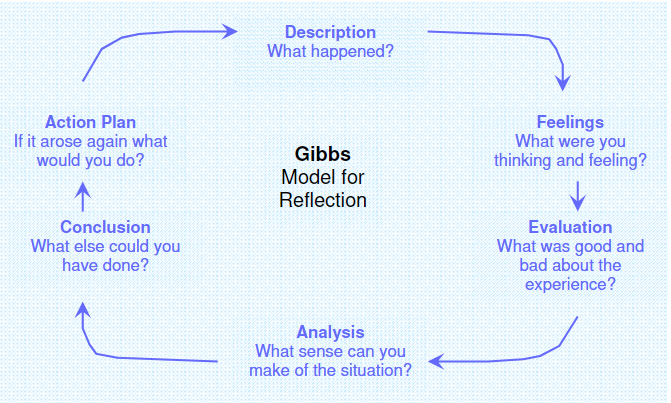
using Gibbs reflective model (Finlay, 2009).


Description
I have changed my teaching pedagogy from what I have learnt through my mindlab journey. This years cohort of diverse students present with a range of fine motor abilities as well as attitudes towards learning. I have adapted my practice to be more inclusive, through social groups with learners that have different needs, moving beyond differentiated groups in the core subjects to making differentiated groups and individual learning for all learners across the curriculum as well as facilitating learning through a servant leadership approach.

Feelings
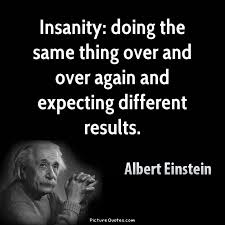
I felt that a big shift towards the wider view of equity, diversity and inclusivity discussed in Bolstad, Gilbert, McDowall, Bull, Boyd & Hipkins (2012), came during reflection and realising that what may work for one class may/will not work for another diverse class. I felt that I could adapt what had worked well last year to meet this years learner needs. However this years class is very unlike last years. Coming to this realisation made me feel deflated that such a successful 2017 could not be repeated in a similar way. It brought to mind Albert Einstein’s quote

This influenced how I reflected and changed my practice to develop my current students skills to work in a diverse 21st century community. Allowing inclusivity through engaging them in a 21st century model that they otherwise wouldn’t have been included.

Evaluation
I found it difficult to change how the task was achieved, especially when it was for one student in particular. My team leader and I discussed the need to meet the diverse needs of my class across the curriculum. Bolstad et al (2012) agrees with this approach, sharing an example that states “we openly discuss the situation for each child and recognise that programmes, expectations and routines will be different for different children. While many of these children have significant challenges, they also have significant skills that others do not” (p28-29). Changing my approach to the task contributed to greater learning and an enhanced level of skills whilst also engaging all of my diverse learners.


Analysis
My lack of knowledge of my students as learners created an issue in an initial art lesson which escalated to everyone, including myself, dreading art lessons. Absolum (2006) suggests “learning-focused relationships are about using the considerable potential in the relationship between teacher and student to maximise the student’s engagement”. Although this is always a focus of my practice, particularly at the beginning of the year, understanding my students across the curriculum is an area for improvement. By adapting my approach and changing my teaching pedagogy to a more inclusive and diverse model I have shifted the focus to “produce clades, life-long, independent learners with the capacity to live, work and prosper in a whole range of as yet unknown new environments” (Bolstad et al, 2012, p.26).

Conclusion
My practice has positively changed in my postgraduate journey. I can adapt and change my teaching pedagogy to best meet the needs of my learners, through developing strong learning focused relationships whilst fostering equity, diversity and inclusivity.

Action plan
“Rather, the future-focused education literature suggests we need to adopt a much more complex view of knowledge, one that incorporates knowing, doing and being. Alongside this we need to rethink our ideas about how our learning systems are organised, resourced and supported” (Bolstad et al, 2012, p.2). I could also alter the task and offer a variety of tools that could be used to complete the same task. This could be achieved by setting the task as a problem that the students need to solve and it is up to them how they solve it or present the outcome. I will continue to approach art (and all curriculum areas) with diversity and a range of tools to accommodate the needs of my diverse learners.


References

Absolum, M. (2006). Clarity in the classroom. Auckland: Hodder Education.

Bolstad, R., Gilbert, J., McDowall, S., Bull, A., Boyd, S., & Hipkins, R. (2012). Supporting future-oriented learning and teaching — a New Zealand perspective. Report prepared for the Ministry of Education. Retrieved from https://www.educationcounts.govt.nz/publications/schooling/109306

Finlay, L. (2009). Reflecting on reflective practice. PBPL. Retrieved from http://www.open.ac.uk/opencetl/sites/www.open.ac.uk.opencetl/files/files/ecms/web-content/Finlay-(2008)-Reflecting-on-reflective-practice-PBPL-paper-52.pdf


Wednesday, 28 March 2018

Week 17 - Applied practice


After reading Finlay (2008) and working with my MindLab study group I began to reflect more deeply on how I reflect. I constantly reflect on my practice privately and with colleagues. I am critical about my practice and willingly change my practice when and as needed. I make anecdotes to my plan, make notes in modelling books and have discussions with colleagues. For example if my students are not on task at the beginning of a writing lesson then I take into account the students' cues and reflect on why. I then may get the students to come back to the mat to either discuss the topic again or change the topic completely to gain better clarity. I make notes on my plan and in my modelling book for future reference and formative assessment. I then reflect with my colleagues as we plan together, we discuss what has gone well and how we can support our learners with our next steps. This works for myself, my students and my colleagues as we work well together to share our ideas.  
However from the research that I have done for this activity I have realised that I need to use more research and use reflective models such as Jay and Johnson’s (2002) reflective model. Continuing with the writing example I could use research about writing such as Sheena Cameron and Louise Dempsey’s The Writing Book (2013) to help support future change. This is what we endeavour to do in our school teaching inquiry, reflecting against our own hunch, beliefs and values but if I use research and wider reflection beyond self reflection I can challenge my own thinking. If I am not looking beyond my own thoughts and beliefs then I am not likely to change my perspective.
According to Finlay (2008) critical reflection is “understood as part of the process of life-long learning (p.1). Critical reflection-on-action should “review, describe, analyse and evaluate their past practice with a view on gaining insight to improve future practice” (Finlay, 2008, p.1). Within the mindlab course activities I noticed that others find frequent reflective practice easy when it is with colleagues or by themselves. Sharing reflections with the wider professional community is not something we are so good at and an area I also need to develop. Regular reflections that occur within our own heads and with colleagues have value that can be added through sharing with a larger community or professionals. I can improve this by ensuring I make time to use research to support my critical reflections and sharing these via my blog. I started this blog when I began my MindLab journey but I feel that I am only just beginning to become truly reflective of my learning journey.
Finlay (2008) has made me think about my perspective of reflecting as needing to be more than what I do currently in my teaching bubble. There is vast knowledge, expertise and experience just a click away that I could be tapping into to continue to enhance my professional development. This perspective will influence my reflective practice as I become more open with my reflections through sharing my critical reflections online and becoming a more of an active member in collaborative formats outside of my school colleagues such as blogging, being an activities participant in the New Zealand Teacher facebook group, other teaching/education groups and twitter groups. As a PLC leader in my school I will use the reflective model to improve my leadership practice and support my followers in their reflective learning journeys as we work through our collaborative teaching inquiries.

References
Cameron, S., & Dempsey, L. (2013). The writing book; A practical Guide for Teachers. Auckland, N.Z.: S. Cameron.
Finlay, L. (2009). Reflecting on reflective practice. Practice-based Professional Learning Centre, Open University. Retrieved from http://www.open.ac.uk/opencetl/sites/www.open.ac.uk.opencetl/files/files/ecms/web-content/Finlay-(2008)-Reflecting-on-reflective-practice-PBPL-paper-52.pdf
Jay, J.K. and Johnson, K.L. (2002). Capturing complexity: a typology of reflective practice for teacher education. Teaching and Teacher Education, 18, 73-85.

Wednesday, 14 March 2018

Week 14

Multi Local
Rituals - where do you shop? Where does the food come from that you eat?
Relationships - facetime or physical who do you spend your time with in a week?
Restrictions - where are you able to live? What passport do you hold?


Analogy
Considered images and their analogy of culture and how to work effectively across cultures.
We saw all 4 pictures as a set and decided it depended on perspective.
  • Big fish and little fish. Big fish appears big but if zoomed out it may not be big compared to a whale etc. Fish is not aware of the water as it knows nothing else.
  • House in the distance behind the sea. The house looks like it is on the water but there may be land between.
  • Camera lense. Can zoom in and out and focus on different things. Wide and close up lense views.
  • Iceberg. Wide iceberg at the top to narrow above the water but what is under the water.
Relating back to our students… it is our perspective on the learners and that to be culturally aware
we need to be aware of what we can’t see. Not just understanding others but understanding ourselves and our perspectives.


Curriculum Principles
A report by the ERO looked at how well the eight principles of the New Zealand Curriculum
were represented in classrooms  The eight principles studied were:
  • Coherence
  • Community engagement
  • Cultural diversity
  • Future focus
  • High expectations
  • Inclusion
  • Learning to learn
  • Treaty of Waitangi
The report found that “Cultural diversity, future focus and Treaty of Waitangi were the least well represented principles in approximately a third of classrooms. These three principles were not evident at all in about a sixth of classrooms.”(Educational Review Office, 2012).
Education Review Office. (2012). The New Zealand Curriculum Principles: Foundations for Curriculum Decision-Making. Retrieved from http://www.ero.govt.nz/publications/the-new-zealan…

Digital
Engagement and agency


Working in Google docs and measuring the engagement in comparison to writing in their writing books, their cognitive engagement was greater as they had to focus on achieving their goals.  Their behavioral engagement and the emotional engagement improved through the collaboration with their peers as they developed relationships through communication and feedback.


Working with Seesaw has brought similar results with students asking to engage with the program and extend their cognitive, emotional and behavioral competencies.


Student Agency
Martin (2004, p. 135) characterises agency as "the capability of individual human beings to make choices and act on these choices in a way that makes a difference in their lives”. However, although we might believe that the most transformative learning comes from the learner’s own agency, Lindgren and McDaniel (2012, p.346) underline that “giving students the sense that they have control and the power to affect their own learning is one of the great challenges of contemporary education”.


Lindgren, R., & McDaniel, R. (2012). Transforming Online Learning through Narrative and Student Agency. Educational Technology & Society, 15(4), 344–355.

Martin, J. (2004). Self-Regulated Learning, Social Cognitive Theory, and Agency. Educational Psychologist, 39(2), 135-145.

Week 15

In 20 years jobs that will still exist are jobs that will require emotional care / human response, designers etc,

Artificial intelligence
  • Thinking humanly
  • Thinking rationally
  • Acting rationally
  • Acting humanly

“Inquiry - the organised pursuit of curiosity.” Stenhouse, L. (1981). What counts as research? British Journal of Educational Studies, 29(2), 103-144.